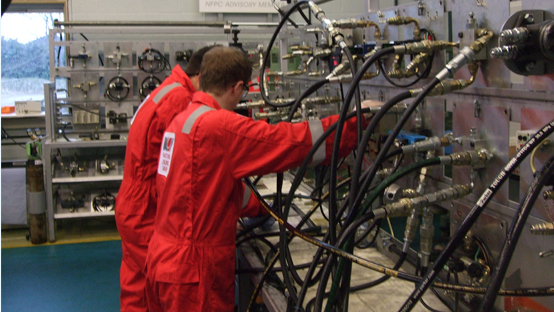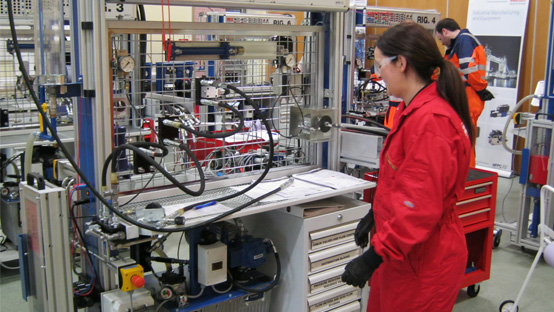














Staff involved in installation, commissioning, pro-active maintenance techniques and troubleshooting associated with hydraulic systems.
Entry Requirements:
Candidates should have completed a Stage 1 Hydraulics training course and have some experience with fluid power systems.
Course Aims:
To provide a thorough understanding of contamination management, from the origin of the contaminants, preventive measures to restrict ingression, methods of assessing cleanliness level and ways in which target cleanliness levels are maintained, plus corrective actions where necessary.
Course Outline:
The real hard facts - Why systems fail
Preventive v's corrective actions
Determining existing cleanliness levels
Establishing target cleanliness levels and appropriate pro-active maintenance techniques
Periodic measurement through sampling and assessment techniques
Interpretation of results to:
ISO 4406/1999
NAS1638
SAE 4059E
Additional Information:
As high as 80% of all hydraulic failures can be attributed to contamination.
Failure to address and effectively manage this problem will lead to expensive downtime and short component life.
Establishing a proactive cleanliness control programme is the most effective way of preventing downtime and experience shows that removing contamination before it enters the system can be at least 5 to 10 times more cost effective.
THIS COURSE IS A MUST - The oil is the life-blood of the system and failure to address its cleanliness level may well result in catastrophic failure.
This course can be extended to include microscope techniques and particle counting/assessment for an extra fee, please contact us if you require this training.
Leading to:
A certificate of attendance. This course is an excellent module for those on route for BFPA qualification.
Notes:
All delegates will receive a comprehensive set of support notes, lunch and refreshments.